AO Type in PAN Card: Ward vs Circle Explained
Of the four parts of an AO code, the AO Type is the one that decides who actually handles your file. It is usually a single letter, and most of the time that letter is either W or C. People skim past it, but it is the piece that sorts you into the right kind of tax officer. Get it wrong and your PAN can land with an officer who handles a completely different class of taxpayer. This guide explains what the AO Type is, the real difference between Ward and Circle, and which one applies to you.
If you have not seen the full structure yet, the complete AO code guide covers all four parts. Here we stay on the AO Type alone.
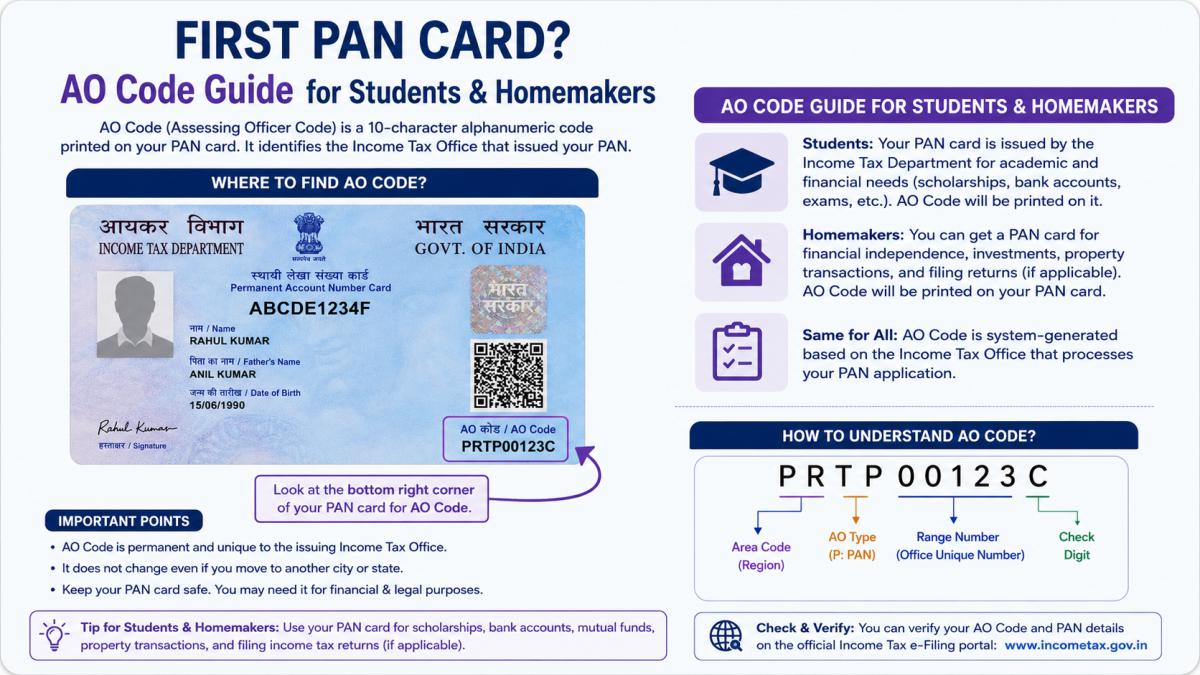
What the AO Type is
The AO Type is the second component of your AO code, sitting right after the Area Code. While the Area Code says which region your jurisdiction is in, the AO Type says what category of taxpayer you are. That category determines whether your file goes to a Ward or a Circle.
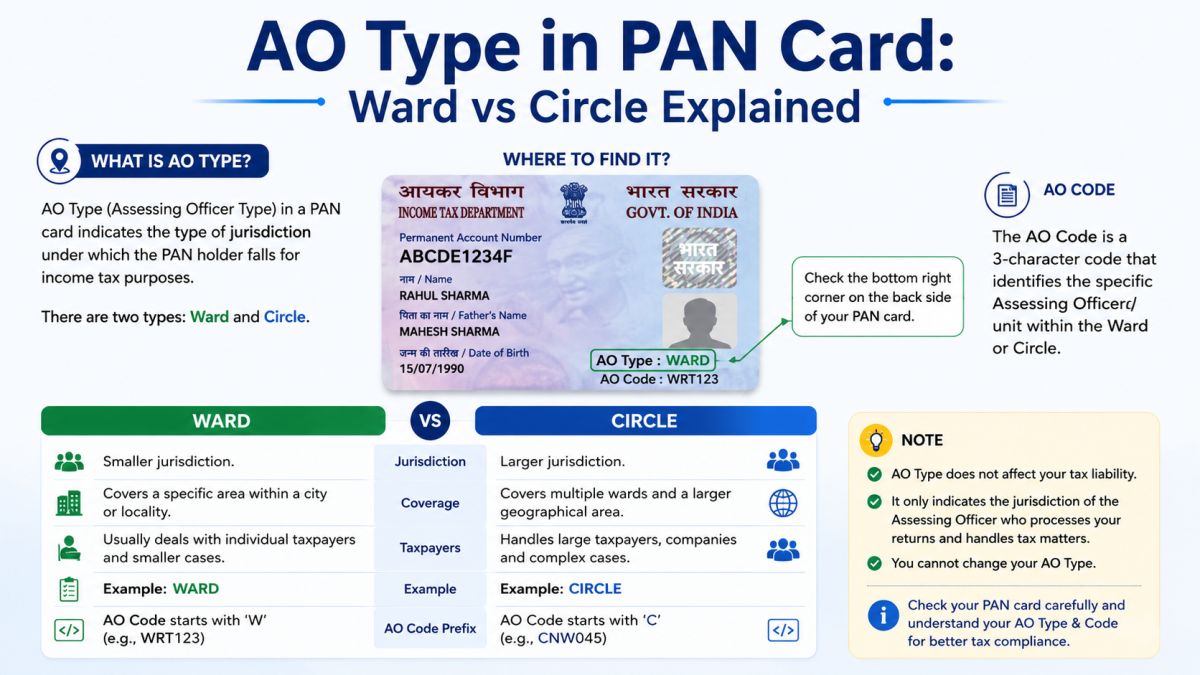
The two letters you will see most often are W and C. W stands for Ward. C stands for Circle. They are not interchangeable, and you do not pick whichever you like. The right one follows from your income and the kind of taxpayer you are.
What does AO Type "W" mean?
W means Ward. A Ward generally handles individual taxpayers in the standard income range, which covers most salaried people and ordinary first-time applicants. If you are a salaried employee, a student applying for a PAN, or a person with a regular, modest income, your AO Type is very likely W.
Wards exist because the bulk of taxpayers are ordinary individuals, and grouping them under Ward officers keeps that volume manageable. So if you are a regular individual, seeing a W in your code is normal and correct.
What does AO Type "C" mean?
C means Circle. A Circle generally handles companies, partnership firms, HUFs, trusts, and higher-income individuals. The work here is heavier and more scrutiny-intensive, so it sits with Circle officers rather than Ward officers.
If you are registering a PAN for a company or a firm, or you are an individual with a large income, your AO Type is likely C. The threshold and the exact mapping are set by the department, and they can be revised, so the safest move is to confirm through a lookup rather than assume.
Ward or Circle: a simple way to decide
| If you are | Likely AO Type |
|---|---|
| A salaried employee on a normal salary | Ward (W) |
| A student, homemaker, or first-time applicant with modest or nil income | Ward (W) |
| A company, firm, HUF, or trust | Circle (C) |
| An individual with a high income | Circle (C) |
The deciding factor is income and entity type, not your address. Two people living on the same street can have different AO Types if one is a salaried employee and the other runs a large business. Students, homemakers, and nil-income applicants are covered in more detail in the AO code for students and housewives guide.
Can I choose my own AO Type?
No, and this is where people go wrong. The AO Type is not a preference. It is assigned based on your jurisdiction and taxpayer category. You cannot decide to be a Ward case to seem smaller, or a Circle case to seem bigger. When you search your AO code, the result already carries the correct AO Type for your area and category. You just copy what the lookup gives you.
How to find your AO Type
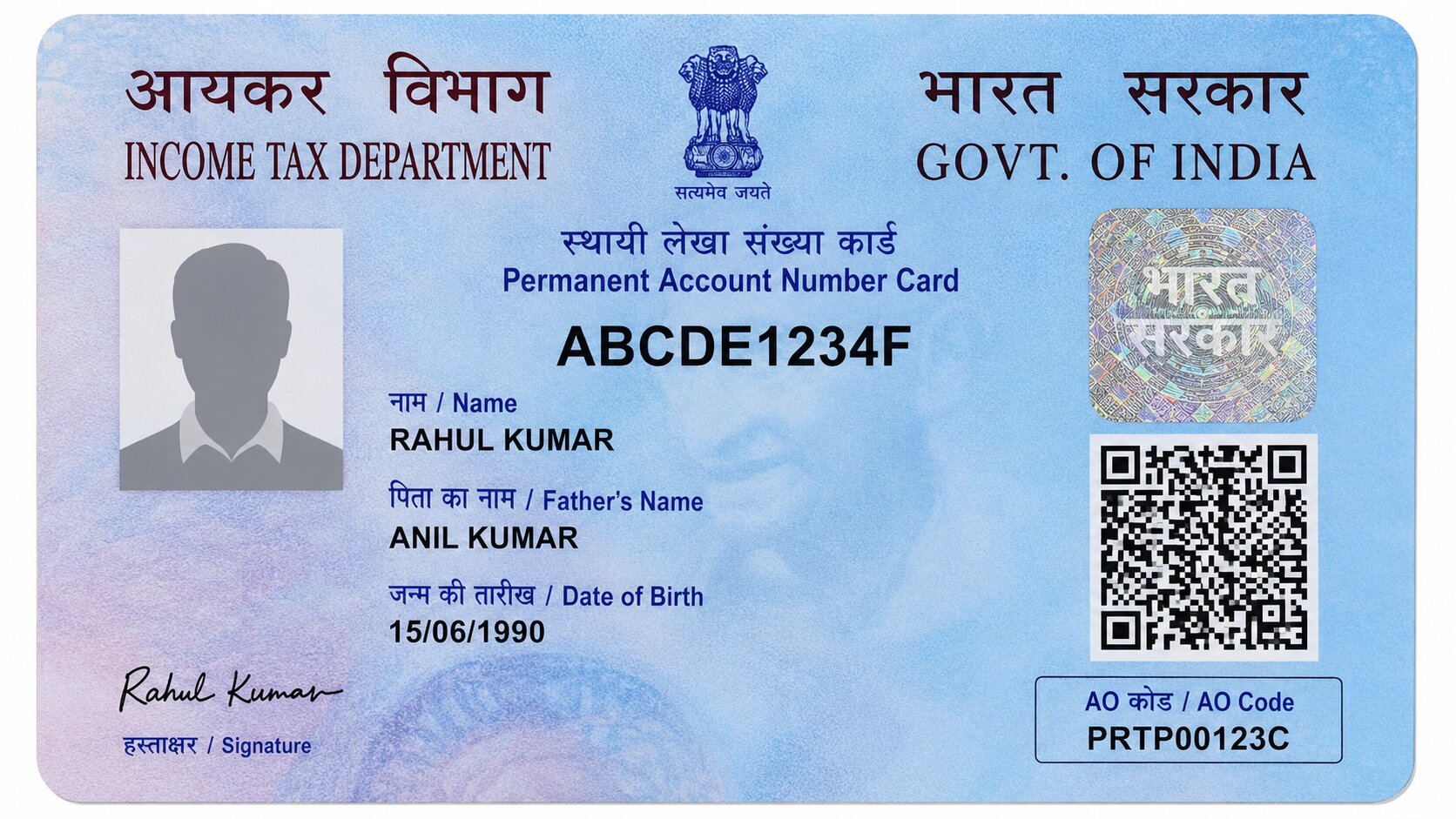
Your AO Type comes bundled inside your full AO code, so you do not look it up on its own. You find your AO code and read the second part.
- Search your AO code by city or PIN code. The result shows the full code, and the letter after the Area Code is your AO Type.
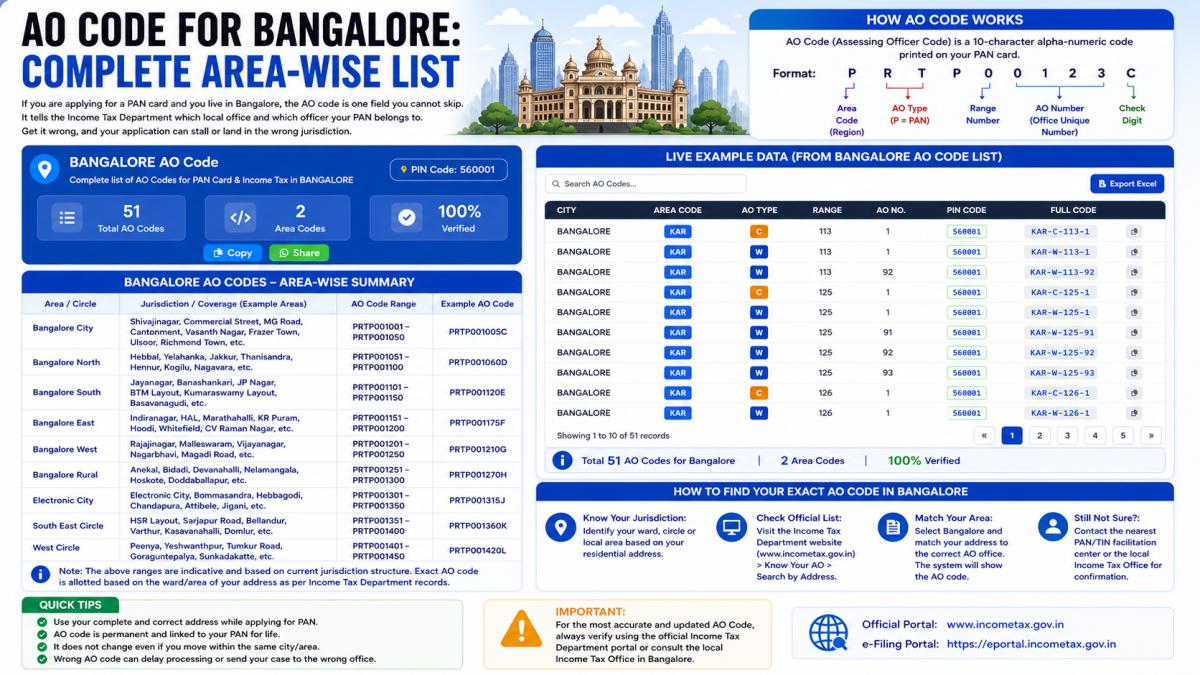
- For a specific city, open its page directly, for example the Mumbai AO code list, and match the description to your ward or circle.
- If you already have a PAN, "Know Your AO" on the Income Tax portal shows your assigned officer, including whether it is a Ward or a Circle. There is a walkthrough in checking your AO code online without login.
How the AO Type fits with the rest
The AO Type is the second of four parts. After it come the Range Code and the AO Number, which narrow your jurisdiction down to the exact officer. For the full picture of how the four parts connect, see the four parts of an AO code.
A common mistake
The most frequent error is a salaried applicant copying a Circle code because a colleague or a business-owner relative used it. Their income profile is different from yours, so their AO Type may not be yours. Pull a fresh code for your own situation and let the lookup decide the AO Type for you.
Frequently asked questions
What is AO Type in a PAN card?
It is the second part of the AO code that classifies the kind of taxpayer you are. It decides whether your file goes to a Ward or a Circle.
What does W mean in the AO code?
W stands for Ward, which generally handles individual taxpayers in the standard income range, including most salaried people.
What does C mean in the AO code?
C stands for Circle, which generally handles companies, firms, HUFs, trusts, and higher-income individuals.
Should a salaried person choose Ward or Circle?
For a salaried individual on a normal salary, the AO Type is usually Ward (W). You do not choose it; the lookup assigns it based on your jurisdiction and category.
Can I change my AO Type?
You cannot set it yourself. It changes only if your jurisdiction or taxpayer category changes, and it is reflected when you look up your current AO.
This data is verified from the official Protean (NSDL) TIN portal AO code search and the Income Tax Department's Know Your AO service. Ward and Circle mappings are set and revised by the Income Tax Department, so confirm your exact AO Type through the official lookup before submitting. Last verified May 2026.