First PAN Card? AO Code Guide for Students & Homemakers
If you are applying for your first PAN card and you do not have a job, the AO code field is usually where you get stuck. You have no salary, no business, no office address. So what do you even put there?
This trips up a lot of students and homemakers. There is a common piece of advice floating around that says people without income can just leave the AO code blank. That is wrong, and following it can get your application rejected. Here is what actually applies to you.
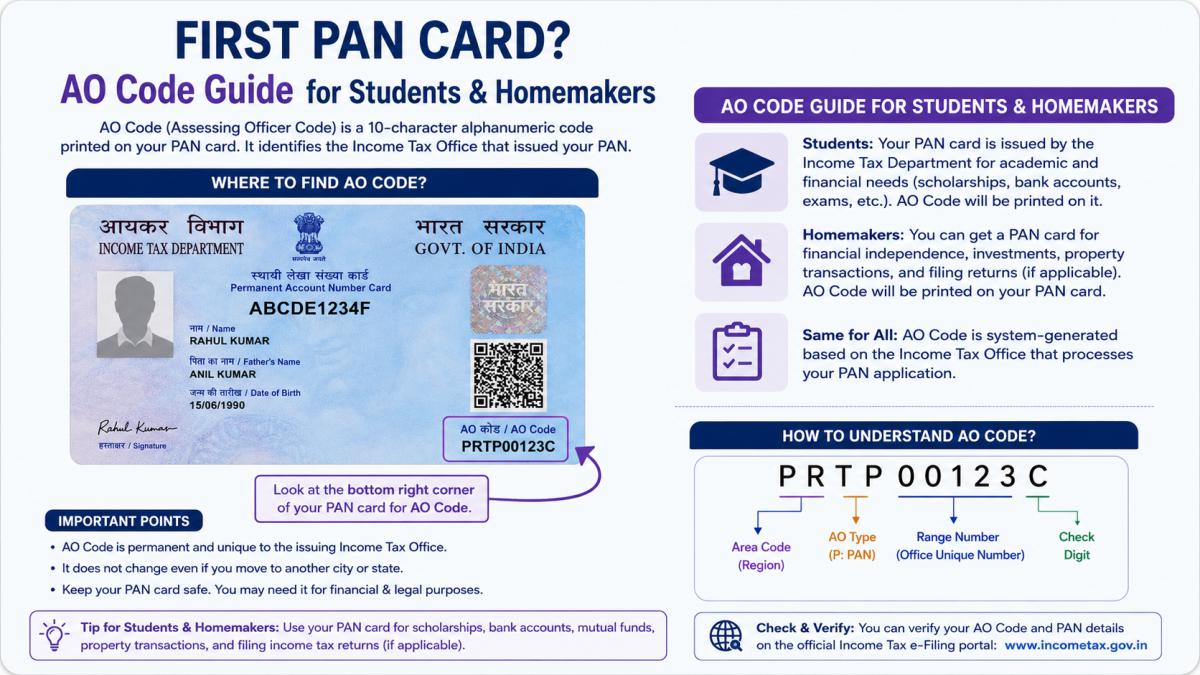
What the AO Code Is, in Plain Terms
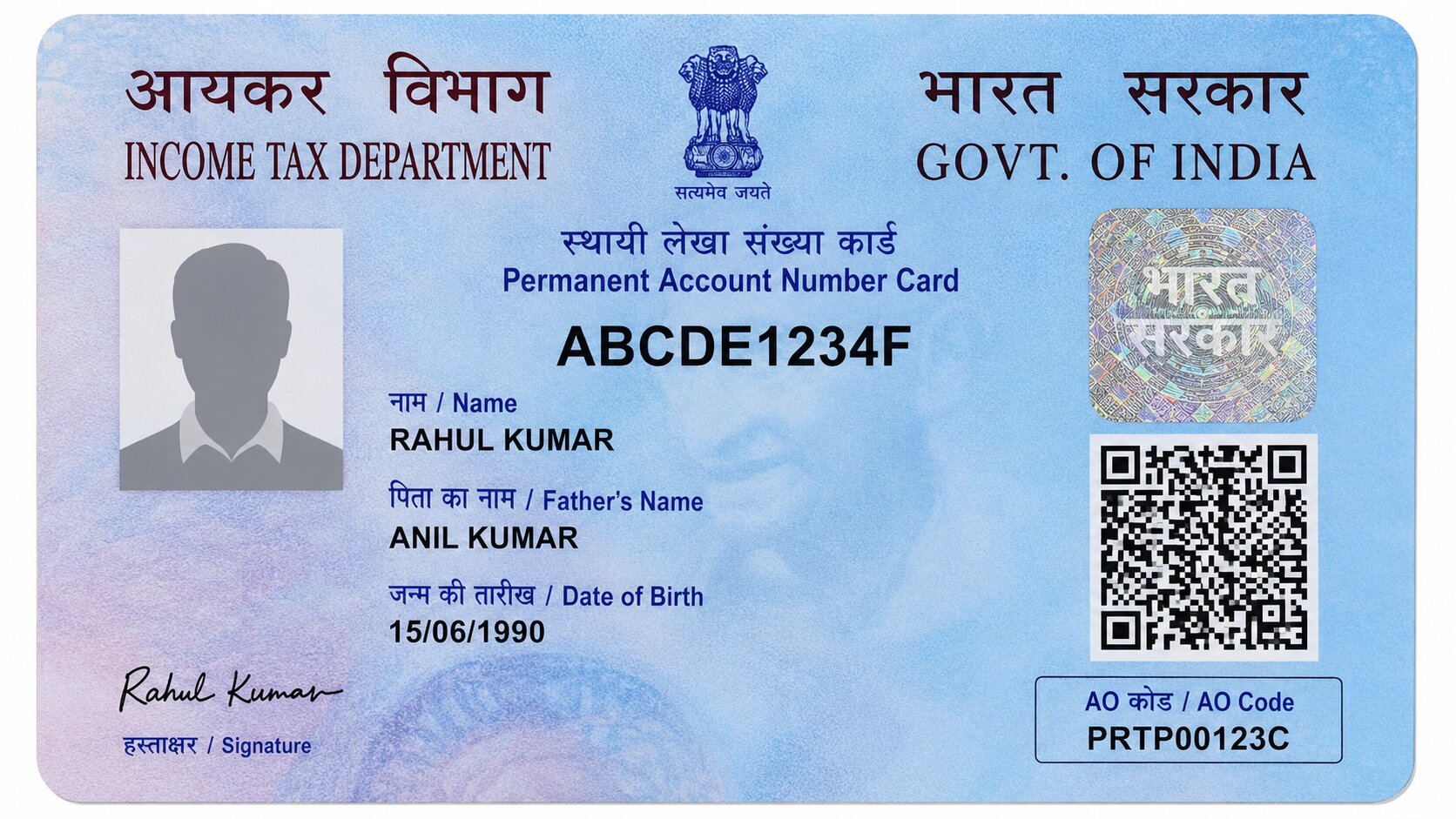
The AO code tells the Income Tax Department which officer and which local office your PAN belongs to. It is built from four parts: Area Code, AO Type, Range Code, and AO Number. Together they point your file to a specific tax ward based on where you are and what kind of taxpayer you are.
Even if you earn nothing right now, the department still needs to file your PAN somewhere. That somewhere is decided by your home address.
The Rule for Students and Homemakers
This is the part that matters most, so let me be direct about it.
If you are a student, a homemaker, or otherwise not employed, you pick the AO code of your residential address, under the "Individual" taxpayer category. There is no separate "student" code or "homemaker" code. You are just an individual, and your address decides your jurisdiction.
Two things people get wrong:
- "I can leave it blank since I have no income." No. The AO code is a mandatory field. Leaving it empty can cause your application to be rejected or held up.
- "There must be a default code for people like me." There is no default. AO codes are specific to both category and location, so everyone has to select the right one for their own area.
So the answer to "what do I put?" is simple: use the individual-category AO code for the city or area where you live.
How to Find Your AO Code
You do not have to guess this. There are official tools that list AO codes city by city. You can use any of the three below.
Through the Protean (NSDL) portal:
- Go to the Protean e-Gov PAN AO Search page.
- Select your state and city.
- Choose the taxpayer category. For students and homemakers, this is the individual category (shown as "P" on these lists, meaning a person).
- A list of AO codes appears with the area code, AO type, range code, and AO number.
- Read the descriptions next to each entry to find the ward or circle that covers your address.
Through the UTIITSL portal:
- Go to UTIITSL's PAN Card Services and open "Search for AO Code Details" at utiitsl.com/aocodedetails.
- Select your category and city.
- The matching AO details show up by area, type, range, and number.
Through the Income Tax e-filing portal:
- Go to incometax.gov.in and use "Know Your AO" under Quick Links.
- Note: this one is more useful after you already have a PAN, since it looks up an existing jurisdiction. For a fresh application, the Protean or UTIITSL search above is the practical choice.
Reading the City List Correctly
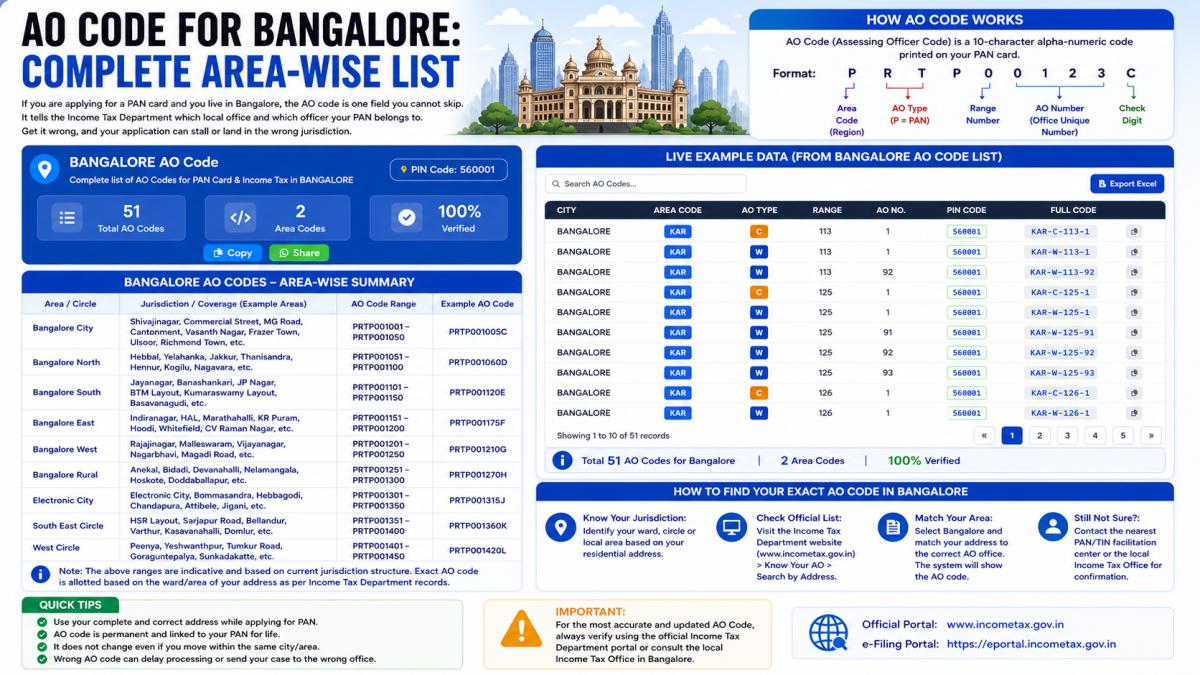
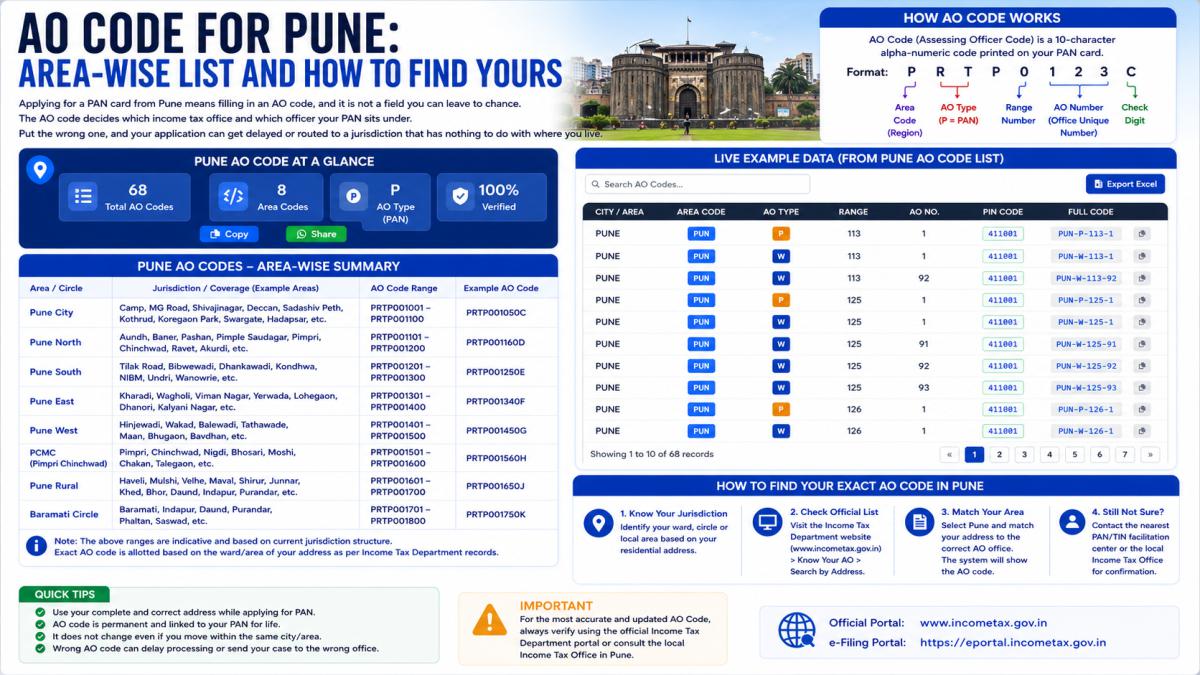
When you open an AO code list for your city, you will usually see several entries, not one. They are split by ward, circle, and sometimes by alphabet of surname or type of taxpayer. This is normal, and it is also where people pick the wrong one.
For a student or homemaker with no business, you want the entry meant for individuals and non-employed persons in your area, often described by locality or by a range of surnames. If two or more entries seem to fit and you genuinely cannot tell which is yours, that is the moment to stop guessing.
When You Are Not Sure, Ask the Right Place
The AO code for any PAN can also change over time as the department reorganises its wards, so even the lists are not permanent. If you are unsure which code applies to your address, the reliable move is to contact your local Income Tax Office. They can confirm the exact jurisdiction for where you live. This is better than picking a code at random and risking a rejection.
Quick Answers
I am a student with no income. Which AO code?
The individual-category AO code for your residential address. There is no separate student code.
I am a homemaker. Is it different for me?
No. Same rule. You select the AO code for your home address under the individual category.
Can I leave the AO code blank?
No. It is a required field. A blank or wrong code can get your application rejected or delayed.
Is there a default AO code I can use?
No default exists for resident individuals. It is always specific to your category and location.
Bottom Line
Having no income does not exempt you from the AO code. As a student or homemaker, you are an individual taxpayer, and your residential address decides your jurisdiction. Look up your city's individual AO code on the Protean or UTIITSL search, match it to your locality, and if two entries leave you unsure, call your local Income Tax Office before you submit. That one check saves you from a rejected application.