AO Code vs Jurisdiction: What's the Difference?
People use "AO code" and "jurisdiction" as if they mean the same thing, and in casual talk that is mostly fine. But they are not identical, and understanding the difference helps when you are filling a PAN form, reading a tax notice, or trying to figure out which office handles your file. Here is the distinction in plain terms.
The Short Version
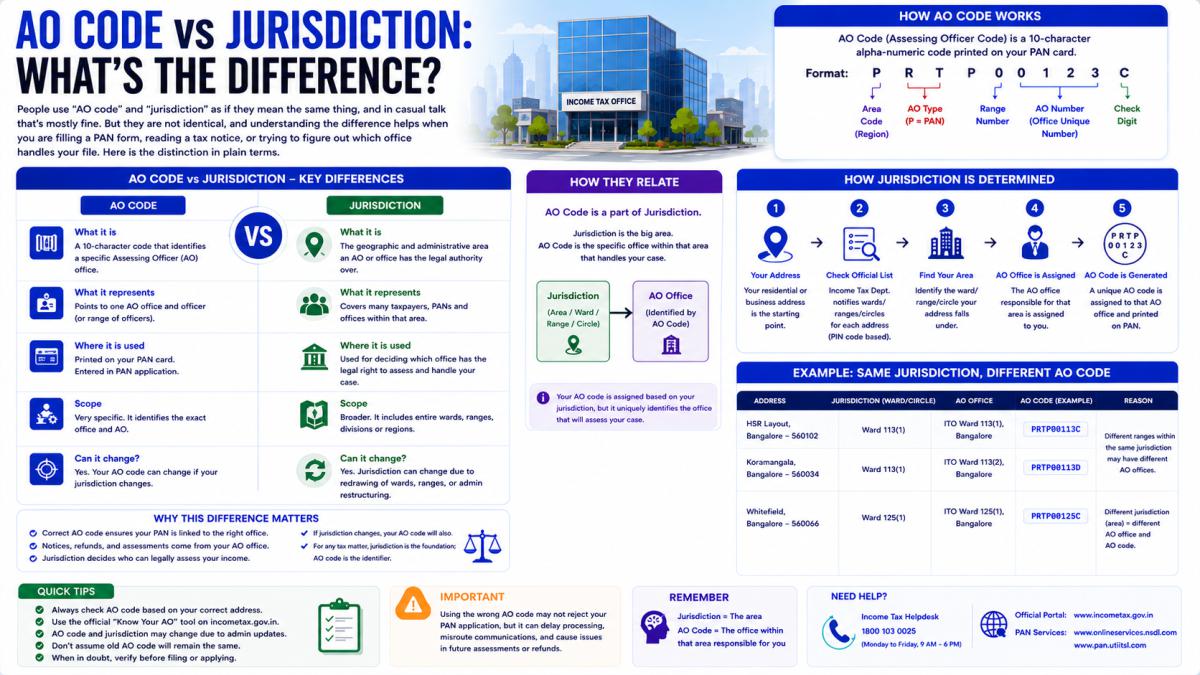
Jurisdiction is the concept: the tax office and officer responsible for your file. The AO code is the identifier: the specific alphanumeric label that points to that jurisdiction. One is the thing, the other is the address tag for the thing. They are tightly linked, but they are not the same word for the same object.
What Jurisdiction Means
Your PAN jurisdiction is the area and office under which your income tax matters are handled. The Income Tax Department divides the country into wards and circles, and each one has a designated Assessing Officer. Your jurisdiction is decided by where you live or where your business is based, and by your income level and taxpayer type. It is the answer to the question "which office deals with my taxes?"
Jurisdiction is what matters when you need to send physical correspondence, visit an office, or understand who issued a notice. It is described in human terms: a named ward or circle, an office building, a covered area.
What the AO Code Is
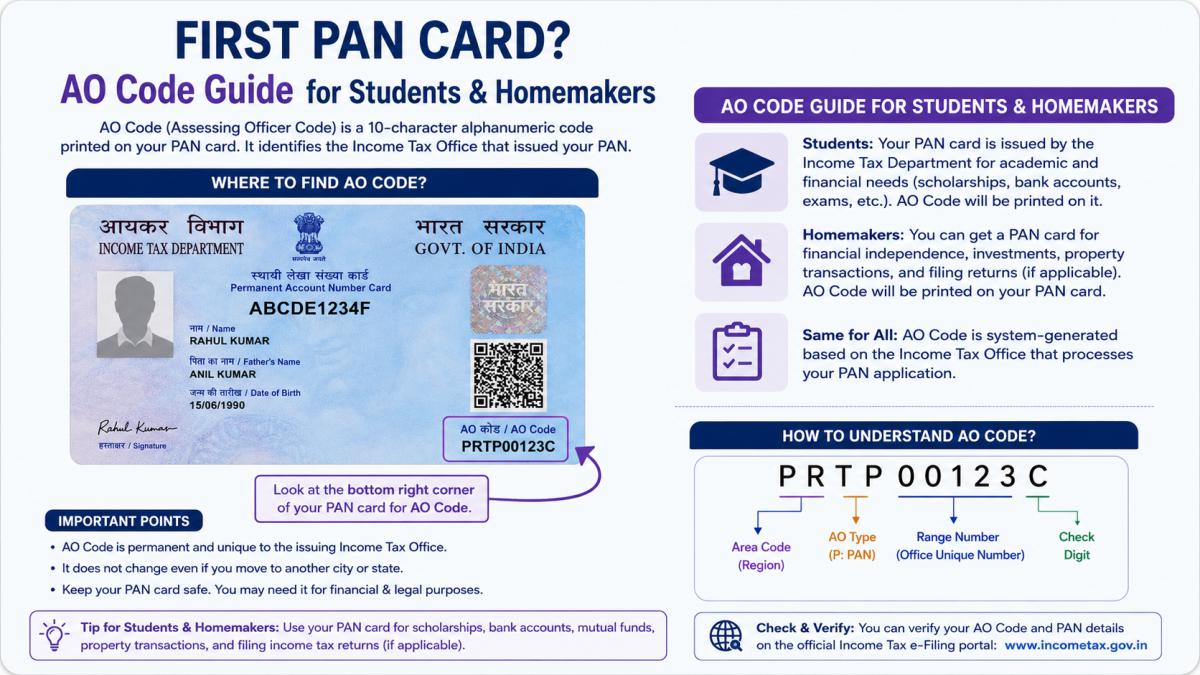
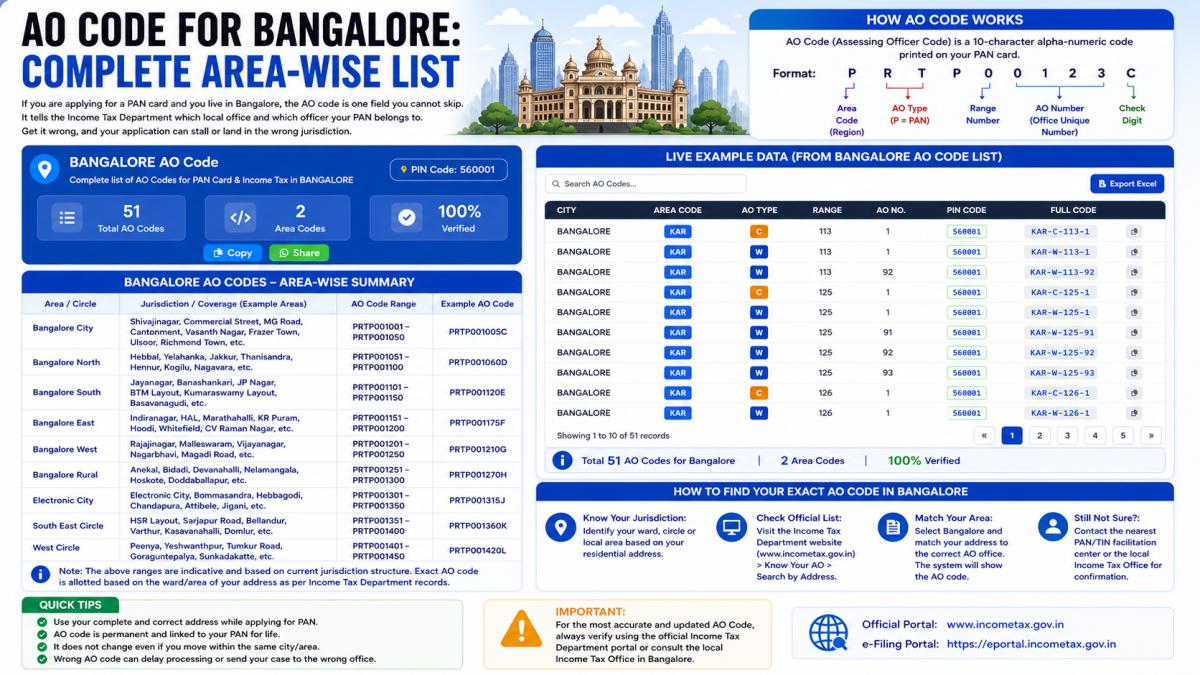
The AO code is the machine-readable shorthand for that jurisdiction. It is built from four parts:
- Area Code: three letters for the region.
- AO Type: W for Ward, C for Circle.
- Range Code: a number for the range within the region.
- AO Number: the number of the specific Assessing Officer.
So while your jurisdiction might be described as a particular ward in your city, the AO code is the coded version of that same ward, the thing you actually type into the PAN application form.
An Analogy
Think of it like a postal address and a PIN code. Your jurisdiction is the full address, the named locality you would describe to a person. The AO code is more like the PIN code, the compact identifier that systems use to route things to the right place. Both point to the same location, but one is descriptive and one is coded.
Where the Confusion Comes From
The two get blurred because you rarely deal with one without the other. When you look up your jurisdiction on the official tools, the result shows both: the named ward or circle (the jurisdiction) and its area code, AO type, range code, and AO number (the AO code). Since they appear together and always match, people treat them as one thing. For everyday purposes that is harmless, but the distinction matters when a form asks specifically for the AO code, or when a notice references your jurisdictional officer.
How to See Both for Your PAN
The "Know Your AO" service on the Income Tax e-filing portal shows you both at once. Enter your PAN and registered mobile number, verify with an OTP, and you will see your jurisdictional details: the area code, AO type, range code, AO number, the building name, the taxpayer jurisdiction description, and the ward office contact. The coded part is your AO code; the descriptive part is your jurisdiction.
Which One Do You Need, and When?
- Filling a PAN application: you need the AO code, the four-part identifier.
- Sending a letter or visiting in person: you need the jurisdiction, the named office and address.
- Responding to a notice: you usually need to know your jurisdictional officer, which the notice and the portal both reference.
Do They Ever Change?
Yes, and they change together. If you move your residence or business, your jurisdiction shifts and so does your AO code. The department also reorganises wards and circles from time to time, which can reassign both even if you have not moved. They stay in sync because they describe the same thing in two formats.
Bottom Line
Jurisdiction is the office and officer responsible for your taxes; the AO code is the four-part coded label that identifies that jurisdiction. You type the AO code into forms; you reference the jurisdiction when dealing with the office directly. They always match, they change together, and you can see both at once through the "Know Your AO" service on the official portal.
Disclaimer: This is an informational guide, not a government website. AO codes and jurisdiction are managed by the Income Tax Department of India. Verify your details through the official Income Tax, Protean (NSDL), or UTIITSL portals.